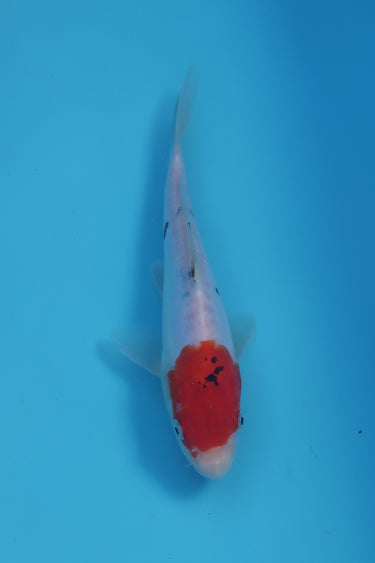

Hiroi
Doitsu Tancho Sanke | HIR-025
Age: Tosai
Breeder: Hiroi
Breeder Certificate: No
Country of Origin: Japan
Date Measured: March 2026
Gender: Unsexed
Size (cm): 19
Shipping: £29.95 overnight courier | UK Mainland only
products.product.pickup_availability.unavailable

Product information
Return Policy:
Dry Goods
We have a 14-day return policy on dry goods, which means you have 14 days after receiving your item to request a return. Items sent back to us without first requesting a return will not be accepted.
To be eligible for a return, your item must be in the same condition that you received it, unworn or unused, with tags, and in its original packaging. You’ll also need the receipt or proof of purchase. If returned via online order please provide us with the order number.
To start a return, you must contact us via telephone or email via sales@js-koi.co.uk. The customer is responsible for any shipping charges incurred during the returns process. Please note that returns will need to be sent to the following address: 7 Fleam Road, Nottingham, NG11 8PJ.
Returns progress can be viewed via the Orders section of My Account.
Exceptions / non-returnable items:
Live Fish
After leaving our premises, JS KOI Limited accept no responsibility for Koi purchased and cannot be returned due to our strict bio security measures.
Damages and issues
Please inspect your order upon reception and contact us immediately if the item is defective, damaged or if you receive the wrong item, providing as much information as possible using photographic and/or video evidence where applicable, so that we can evaluate the issue as quickly as possible and make it right.
Refunds
We will notify you once we’ve received and inspected your return, and let you know if the refund has been approved or not. If approved, you’ll be automatically refunded on your original payment method within 10 business days. Please remember it can take some time for your bank or credit card company to process and post the refund too.
If more than 15 business days have passed since we’ve approved your return, please contact us at sales@js-koi.co.uk.
Unfortunately, we cannot accept returns on sale items or gift cards.
Shipping Policy:
Deliveries for both Koi and Dry Goods are currently available for UK Mainland only.
Collection of Koi can be made via appointment.
Koi Deliveries:
Koi will be shipped using APC or DX overnight shipping service. Express delivery costs a flat fee of £29.95 per order, there is no restriction on how many koi you can purchase per order. The delivery service provided is a pre 12-1pm 'Next Working Day' delivery on koi only.
Once an order is placed, JS KOI will notify you of available delivery dates. Our dispatch days are Tuesday-Thursday and delivery days Wednesday-Friday. Confirmation may be required due to signature upon delivery. If an order is placed on Wednesday, this will be added to the deliveries for the next day or following week if requested. If you have opted for delivery, we will contact you via email to confirm delivery availability prior to shipping your order. Koi will only be actioned for delivery if confirmation is provided to us by phone or email that a recipient will be at the specified delivery address on the agreed date of delivery to sign for the Koi in person. Please ensure that you provide a valid email address and contact number for deliveries.
All koi purchased between 01/04/2026 and 16/11/2026 can stay at our facilities 28 days from the day of purchase at not extra cost. Beyond the 28 days timeframe, there is a holidng feed of £15 per week on Koi purchased between the specificed dates.
All Koi purchased with us between 15/11/2025 and 31/03/2026 can be wintered within our facilities at no extra cost until 31/03/2025. After this date, there is a holding fee of £15 per week on Koi purchased between the specified dates.
Please check with your local APC courier to ensure Live Fish can be delivered to the specified address prior to purchase.
Unfortunately, due to strict regulations on next-day deliveries for livestock, we only deliver to mainland UK.
Caring for Your Koi
Caring for your koi is essential to maintaining their health, well-being and longevity. Providing good water quality, suitable nutrition, effective filtration and regular health checks will help your koi
thrive. Below are some key aspects of responsible koi care. Disclaimer: Please note that this information provided is only to be used as reference and we strongly advised to conduct thorough research where possible.
1. Water Quality Management
- Monitor water quality regularly. Key parameters include temperature, pH, ammonia, nitrite and nitrate. Ammonia and nitrite should remain at 0ppm, while nitrate should be kept as low as reasonably practical (below 40ppm).
- Test your pond water frequently. Use reliable aquarium or pond test kits and, where appropriate, electronic monitoring equipment. Regular testing helps identify potential problems before they affect your fish.
- Maintain a consistent pH and adequate water hardness. Avoid sudden changes in water chemistry, as these can stress koi.
- Carry out regular partial water changes. As a general starting point, consider changing approximately 10–20% of the pond water weekly, adjusting this according to stocking levels, filtration performance and water test results. Always use a suitable water conditioner such as a dechlorinator when necessary to neutralise chlorine or chloramine in tap water.
- Maintain your filtration system. Ensure mechanical and biological filtration are working effectively, with adequate water circulation and aeration to support beneficial bacteria and provide sufficient oxygen.
2. Feeding and Nutrition
- Choose high-quality koi food appropriate for your fish's size, age, health and seasonal requirements.
- Feed a balanced diet. Choose a quality koi food containing a suitable blend of digestible protein, fats, carbohydrates, vitamins
and minerals to support growth, health, energy and colour development. Adjust the amount and frequency of feeding to suit the koi, water temperature and water test results, and never feed more than the filtration system can handle.
The biological filter needs enough time, oxygen and capacity for beneficial bacteria to establish and convert toxic ammonia into nitrite and then the less harmful nitrate; overfeeding can overwhelm this process and quickly reduce
water quality. - Adjust feeding according to water temperature. Koi metabolism slows as the water cools, so feeding should be reduced gradually as temperatures fall. Wheatgerm-based foods are often used during cooler weather because they are generally easier to digest.
- Feed little and often during warmer
weather. Feed as much food as your koi can consume within five minutes,
repeating this several times a day. Remove any uneaten food promptly to help maintain water quality. We recommend feeding your ko with Saki Hikari koi pellets for a balanced and healthy diet. - Reduce feeding during colder months. As water temperatures fall, reduce both the quantity and frequency of feeding. Below approximately 10°C, feeding should be minimal and based on the food manufacturer's guidance, water temperature and the condition of the fish. It is recommended to reduce or stop feeding around 8–10°C, particularly when temperatures are consistently low as the koi metabolism is reduced. We strongly advise against excessively feed koi when their digestion and metabolism has slowed significantly.
3. Pond Environment and Filtration
- Provide adequate pond space. Ensure your pond has sufficient volume, depth and swimming space for the number and size of koi you keep.
- Install suitable filtration. Effective mechanical and biological filtration is essential for removing solid waste and processing harmful ammonia and nitrite.
- Maintain adequate aeration. Good oxygen levels are particularly important during warm weather, when oxygen availability can decrease and koi require more oxygen.
- Keep the pond and equipment in good condition. Regularly inspect pumps, filters, pipework, drains and aeration equipment to ensure everything is operating correctly.
- Design the pond with koi safety in mind. Smooth surfaces, suitable depth and secure pond boundaries help reduce the risk of injury or escape. Plants and rocks are optional; avoid sharp edges, unstable structures or features that could trap or injure fish.
4. Fish Health and Disease Prevention
- Observe your koi daily. Watch for changes in behaviour, appetite, swimming patterns and breathing. Signs of potential illness include lethargy, clamped fins, flashing, persistent surface gasping, excess mucus, raised scales, ulcers, abnormal growths or visible fungal-like patches.
- Quarantine new arrivals. Where possible, keep new koi in a properly equipped quarantine system before introducing them to your established pond. Quarantine allows observation and, where appropriate, health checks to help reduce the risk of introducing disease or parasites.
- Avoid unnecessary treatments. To determine the cause of change in behaviour of your koi, a microscope is necessary to identify or rule out parasites. Do not use medications or parasite treatments without a clear reason. Where illness is suspected, appropriate testing and advice from an experienced koi health specialist or aquatic veterinarian can help identify the cause and determine suitable treatment.
- Maintain good husbandry. Stable water quality, adequate oxygen, appropriate stocking levels and good nutrition all help reduce stress and support the immune system.
- Seek professional advice when needed. If your koi show persistent or severe symptoms, investigate water quality promptly and consult a suitably experienced fish health professional.
5. Seasonal Koi Care
- Adapt your routine to the seasons. Feeding, pond maintenance and monitoring should reflect changing water temperatures and weather conditions.
- Prepare for winter. Check that pumps, filters and pipework are suitable for winter operation, and consider whether pond heating or insulation is appropriate for your setup.
- Maintain gas exchange. Ensure there is adequate oxygenation and a way for gases to escape from the pond.
- Monitor water quality throughout the year. Biological filtration can become less efficient in colder water, so continue checking water parameters and maintain equipment according to the conditions.
- Take extra care in hot weather. Higher temperatures can reduce dissolved oxygen levels. Maintain adequate aeration and monitor koi closely during periods of heat.
6. Handling and Acclimatisation
- Handle koi carefully. Minimise handling time and use suitable koi-handling equipment to reduce stress and prevent injury. Never lift a koi by its fins or tail.
- Acclimatise new arrivals carefully. Follow the our care guide instructions provided with each live stock order. Avoid sudden temperature changes. Floating a sealed transport bag for around 15–30 minutes helps equalise temperature, but the appropriate time depends on the temperature difference and transport conditions. Even thought we take pride in our quarantine procedures and should you have a quarantine tank, we strongly advise to quarantine you new koi as a precaution.
- Do not release transport water into your pond. Once temperatures are suitably matched, transfer the koi carefully using an appropriate method. Avoid mixing transport water with pond water, and do not leave a fish in a sealed bag longer than necessary.
- Use a quarantine system where possible. A separate, properly prepared quarantine pond or vat is preferable to introducing new fish directly into an established pond. Ensure the quarantine water is dechlorinated, adequately aerated and suitable for the koi before transfer.
7. Further Learning and Advice
- Continue learning about koi care. Books, reputable online resources and specialist publications can help you improve your understanding of pond management, water chemistry, nutrition and fish health.
- Connect with other koi keepers. Local koi clubs and specialist communities can provide useful advice and opportunities to learn from experienced keepers.
- Seek specialist support when necessary. An experienced koi retailer, aquatic veterinarian or fish health professional can help with more complex questions about pond systems, disease prevention and koi welfare.
At JS Koi, we believe that good koi keeping starts with knowledge, consistent care and excellent water quality. By monitoring your and and understanding your koi's needs throughout the year, you can help
provide a healthy environment in which they can thrive.
F.A.Q.
What payment methods can I use?
We offer several different payment methods including major providers like Mastercard, Visa, PayPal, Shop Pay, American Express, Klarna, Apple Pay and Google Pay.
Please note that your billing address must match the address on your credit card statement.
What shipping methods does JS KOI offer?
JS KOI delivers exclusively to the UK Mainland. Koi are shipped via overnight service, while dry goods arrive within 1-3 business days using express delivery.
Can I make changes to my order after it’s been placed?
We do everything we can to fulfil orders quickly. If a mistake has been made with your order information, please contact us via sales@js-koi.co.uk with the correct information and we will get in touch.
How To Return My Items?
Please refer to our Refund and Returns Policy.